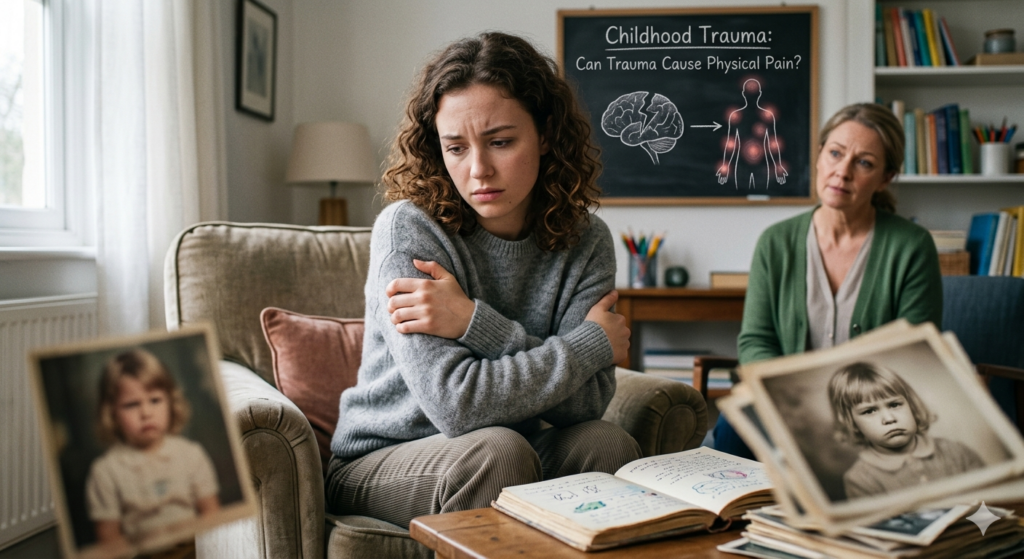
Childhood trauma can affect more than emotional wellbeing. In many cases, early stressful experiences may also influence physical health and create symptoms throughout the body later in life. Many adults experience pain, fatigue, muscle tension, or sleep problems without realizing that unresolved childhood trauma may play a role.
Because the mind and body are closely connected, emotional stress during childhood can directly affect the nervous system and physical wellbeing. As a result, childhood trauma symptoms in adults may continue long after the original experience has ended. This is why many people ask whether trauma stored in the body can contribute to chronic discomfort, emotional overwhelm, or stress-related pain over time.
How Childhood Trauma Affects the Body
The body naturally responds to danger through the fight-or-flight response. This system helps protect the body by increasing alertness, heart rate, and energy during stressful situations. However, when a child experiences ongoing stress, emotional neglect, abuse, or an unstable environment, the nervous system may remain active for long periods of time.
As a result, the body can become tense, overstimulated, and emotionally exhausted. This condition, often connected to nervous system dysregulation, may affect both emotional and physical wellbeing well into adulthood. Many adults with unresolved childhood trauma experience chronic stress symptoms such as muscle tension, fatigue, digestive discomfort, sleep problems, and difficulty relaxing.
Over time, childhood trauma and nervous system stress may keep the body stuck in survival mode, even when no immediate danger exists. Because of this, fight or flight symptoms can continue affecting energy levels, emotional balance, and overall health long after childhood has passed.
Physical Symptoms Linked to Childhood Trauma
Unresolved childhood trauma may affect the body in many different ways, especially when a child experiences long-term stress without enough emotional support. According to Toxic Stress from the Harvard Center on the Developing Child, ongoing stress during childhood can keep the body’s stress response system activated for long periods of time. Over time, this may affect the nervous system, immune system, sleep, and overall physical health.
Because childhood trauma and the nervous system are deeply connected, emotional stress may continue affecting the body well into adulthood. As a result, many adults experience physical symptoms without immediately recognizing the connection to early life stress.
Common physical symptoms of childhood trauma may include:
- Chronic muscle tension
- Headaches or migraines
- Fatigue or low energy
- Digestive issues
- Insomnia or disrupted sleep
- Chest tightness
- Chronic pain
- Panic symptoms
- Stress related pain throughout the body
These emotional trauma physical symptoms may become more noticeable during periods of anxiety, emotional overwhelm, or chronic stress. In many cases, prolonged nervous system activation during childhood may continue influencing physical and emotional wellbeing later in life.
How Holistic Healing May Support Childhood Trauma Recovery

Healing from childhood trauma often involves both emotional and physical recovery. Because trauma stored in the body can affect the nervous system, many people benefit from approaches that support relaxation, emotional balance, and overall wellbeing.
Supportive approaches may include:
- Therapy or trauma-informed counseling
- Mindfulness and breathing exercises
- Somatic healing practices
- Nervous system regulation techniques
- Acupuncture for stress and emotional healing
In particular, acupuncture for emotional healing may help relax the body and calm the nervous system. As a result, some people experience reduced tension, better sleep, and improved emotional balance over time. When combined with other holistic trauma healing practices, acupuncture may support long-term nervous system healing and stress recovery connected to unresolved childhood trauma.
When to Seek Professional Support
Professional support may be helpful when trauma symptoms begin affecting daily life, emotional wellbeing, relationships, or physical health. In some cases, unresolved childhood trauma and nervous system dysregulation can make it difficult to rest, focus, trust others, or manage emotions effectively.
Signs that may indicate the need for trauma recovery support include:
- Ongoing pain without a clear physical cause
- Severe anxiety or panic symptoms
- Chronic fatigue
- Emotional burnout
- Persistent sleep problems
- Chronic stress symptoms that continue over time
- Emotional overwhelm or hypervigilance
Seeking help can be an important step toward healing and recovery. With the right support, many people can improve emotional balance, reduce stress-related symptoms, and strengthen overall wellbeing over time.
Conclusion
Childhood trauma can affect the body as well as emotional health. Chronic stress, nervous system dysregulation, and unresolved emotional experiences during early life may contribute to pain, fatigue, sleep problems, and other physical symptoms in adulthood. These experiences are real, valid, and more common than many people realize.
However, healing is possible with time, support, and the right recovery approach. Through emotional support, nervous system healing, and holistic care, many people can begin restoring balance and improving both physical and emotional wellbeing over time.
To learn more about holistic childhood trauma healing, nervous system recovery, and acupuncture for emotional wellness, visit Kelly Lee Wellness and explore supportive resources designed to help you feel more balanced, grounded, and supported in your healing journey.
